
What is the Google August 2026 Spam Update and What Website Owners Need to Know?
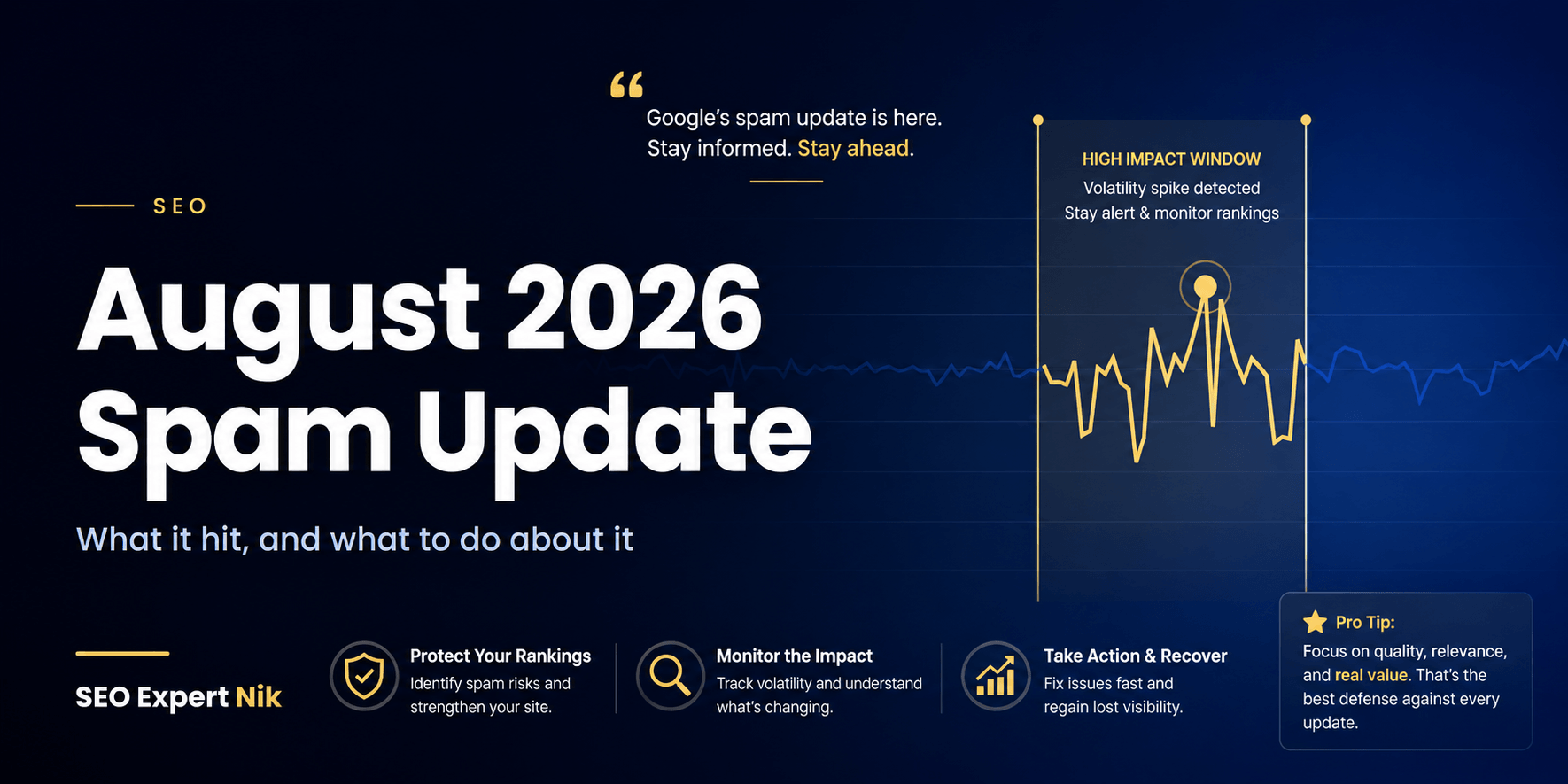
Google has officially completed the rollout of its August 2026 Spam Update, bringing another important change to the way Google detects and handles spam in Search results. The update began on August 18, 2026, and Google confirmed that the rollout was completed on August 21, 2026. According to Google, the update applies globally and across all languages.
For website owners, bloggers, publishers, and SEO professionals, this update is a reminder that long-term success in Google Search depends on creating useful content and following Google’s spam policies.
Google uses automated systems to continuously identify spam and low-quality practices in its Search results. Occasionally, Google makes significant improvements to these systems, which are officially announced as spam updates.
The August 2026 Spam Update is the latest confirmed update of this type. Google stated that the rollout was global and affected all languages, but it did not publicly provide a detailed list of specific tactics targeted by this particular update.
This is important because website owners should avoid making assumptions about every ranking change. A sudden drop in traffic does not automatically mean that a website has been affected by the spam update. Technical problems, seasonal changes, competition, changes in user behavior, and other Google ranking systems can also affect visibility.
What Does Google Consider Search Spam?
Google defines spam as techniques designed to deceive users or manipulate its Search systems in order to gain better visibility. Websites that violate Google’s spam policies may rank lower or, in serious cases, may not appear in Google Search results.
Some practices that website owners should carefully avoid include creating content primarily to manipulate rankings, publishing large amounts of low-value pages, misleading users, and using deceptive techniques to gain artificial visibility.
The main lesson is simple: SEO should help search engines understand genuinely useful content, not attempt to trick ranking systems.
How Can Website Owners Check Whether They Were Affected?
The best place to start is Google Search Console. Website owners should compare their impressions, clicks, and average positions before and after the update.
However, it is important not to panic after seeing a short-term fluctuation. Search rankings can naturally change from day to day. Instead of making immediate changes, website owners should look for consistent patterns across multiple days or weeks.
If a significant decline is visible, review the affected pages carefully. Ask questions such as:
- Does the content genuinely help the reader?
- Is the information accurate and clear?
- Does the page offer something useful beyond what is already widely available?
- Is the content created mainly for people or mainly to attract search traffic?
Google’s guidance continues to emphasize helpful, reliable, people-first content rather than content created primarily to manipulate search rankings.
Is AI-Generated Content Automatically Spam?
No. The important issue is not simply whether AI was used during the content creation process. The real question is whether the final content provides genuine value to users.
Publishing large volumes of repetitive, unhelpful, or copied information can create problems regardless of how that content was produced. On the other hand, technology can be used responsibly as part of a content creation process when there is proper human review, fact-checking, originality, and real value for readers.
Google’s current guidance for AI-powered Search also emphasizes creating unique and valuable content instead of relying on shortcuts or supposed SEO hacks.
What Should Bloggers Do After the Update?
The best response is not to make random changes across an entire website. Instead, focus on improving overall quality.
Create original articles that answer real questions, update outdated information, use clear headings, and make sure important claims are accurate. For topics involving government schemes, news, finance, health, or other important subjects, reliable information and regular updates are especially important.
Avoid publishing multiple pages that say nearly the same thing just to target slightly different keywords. Every page should have a clear purpose and provide useful information to its intended audience.
Website owners should also maintain basic SEO standards, including crawlable pages, logical site structure, useful internal links, and a good user experience.
Final Thoughts
The August 2026 Spam Update was rolled out globally from August 18 to August 21, 2026, and reinforces Google’s ongoing efforts to improve Search quality.
For honest website owners, the safest long-term strategy remains straightforward: create original, helpful, reliable, and people-first content. Instead of chasing shortcuts after every Google update, focus on building a website that users genuinely trust and find useful.
That approach may not produce overnight results, but it remains one of the strongest foundations for sustainable Google Search visibility.